
Gladiator II
Gladiator II is a sprawling, ambitious, violent, and visually magnificent sequel that expands the universe of the original film while asking profound questions about honor, resistance, and the cost of empire.…
Full analysis below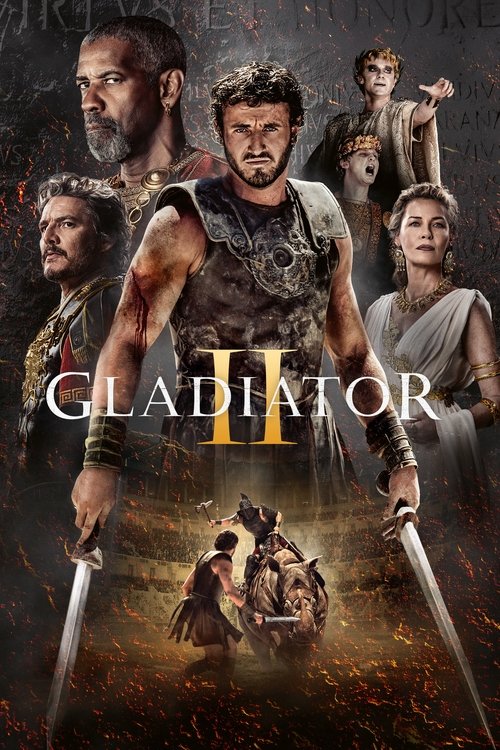
NOT A WOKE TRAP. Gladiator II contains visible diversity casting and a subplot about slave rebellion (Paul Mescal's character Lucius is enslaved). These themes are in the trailers. The film frames slavery as unjust and rebellion as noble, which is explicit from marketing. Conservative viewers can make an informed choice before purchasing tickets.
Our Verdict on Gladiator II
Gladiator II is a sprawling, ambitious, violent, and visually magnificent sequel that expands the universe of the original film while asking profound questions about honor, resistance, and the cost of empire. It is not as tightly focused as the 2000 original, but it compensates with thematic depth and the sheer force of Ridley Scott's directorial vision at age 86.
The plot: Lucius Verus, adopted son of the late Lucilla, has grown into a North African warrior defending his homeland from Roman conquest. When Rome attacks, he's enslaved and transported to Rome itself, where he must survive as a gladiator in the arena. He encounters General Marcus Acacius, a military man of conscience. He encounters Macrinus, a former slave turned political manipulator. And he maintains his honor and purpose through a brutal ordeal that strips away everything except his core identity.
Paul Mescal brings genuine intensity to Lucius. His face carries the weight of survival - the hollow eyes of someone who has endured and lost. The performance is understated and powerful, especially in contrast to the theatrical histrionics of the new emperors (Joseph Quinn's Geta and Fred Hechinger's Caracalla).
Denzel Washington steals every scene he's in as Macrinus, a man who rose from slavery to power through ambition and cunning. His monologues about power, survival, and the mechanics of influence are delivered with Washington's characteristic gravity. The chemistry between Mescal and Washington creates the film's moral axis: the ambitious operator versus the honorable survivor.
Pedro Pascal's General Acacius is a man torn between loyalty to Rome and recognition of Rome's moral failures. His affair with Lucilla (Connie Nielsen) adds romantic complication, and Pascal plays the internal conflict with nuance.
The violence is unrelenting. Gladiatorial combat in Gladiator II is brutal, bloody, and devoid of glamour. People die ugly deaths. The arena is not entertainment - it's a system of control. The film uses violence not for spectacle but as a statement about the brutality of empire.
For traditional audiences, the film's strength lies in its focus on honor, courage, and personal responsibility. Lucius does not wait for external salvation. He survives through his own strength and moral clarity. He makes choices about who to trust and when to strike. The film treats male agency seriously - Lucius's journey is about exercising will and judgment in impossible circumstances.
For progressive audiences, the film's anti-colonial and anti-slavery messaging is explicit. Rome is depicted as an empire built on conquest and exploitation. Lucius's rebellion is framed as justified resistance. The film's diversity casting reflects the historical reality of Rome while also making a statement about whose stories get told: a North African man enslaved by Roman conquest becomes the hero of his own narrative, not a supporting character in Rome's story.
The tension between these two readings is the film's creative force. It's possible to watch Gladiator II as a story of individual courage and honor in the face of oppression - a traditional heroic narrative. It's equally possible to watch it as a critique of empire and a celebration of anti-colonial resistance - a progressive narrative. The film contains enough thematic richness to support both readings.
The cinematography is operatic. Scott frames Rome as a city of marble and blood, vast and inhuman. The arena is rendered as a technological marvel of cruelty. The North African deserts and forests are depicted as spaces of freedom and authenticity. Visual storytelling carries as much weight as dialogue.
At 170 minutes, the film occasionally loses momentum. There are political scheming sequences that drag. The dual emperors' subplot becomes repetitive. A second act romance feels underdeveloped. But the emotional core - Lucius's journey from enslaved man to arena champion to revolutionary - maintains tension throughout.
The film's ending is deliberately ambiguous. Lucius achieves his immediate goal (avenging his people through his triumph in the arena), but larger questions of empire and resistance remain unresolved. This is not a film that ties everything neatly. It's a film that grapples with genuinely difficult moral questions and leaves viewers to draw their own conclusions.
Woke Tropes & Content Analysis
Formula: Weighted Score = Severity × Authenticity Multiplier × Centrality Multiplier
🔴 Woke Tropes
| Trope | Severity | Authenticity | Centrality | Score |
|---|---|---|---|---|
| Anti-Colonial / Anti-Imperial Messaging | 3 | 0.8 | 0.9 | 2.16 |
| Slavery Critique | 3 | 0.8 | 0.8 | 1.92 |
| Diversity Casting as Representation | 2 | 0.7 | 0.6 | 0.84 |
| TOTAL WOKE | 4.9 | |||
🟢 Traditional Tropes
| Trope | Severity | Authenticity | Centrality | Score |
|---|---|---|---|---|
| Individual Honor & Stoic Courage | 5 | 1 | 1 | 5 |
| Male Agency & Personal Responsibility | 4 | 1 | 1 | 4 |
| Martial Skill & Physical Competence | 3 | 1 | 0.8 | 2.4 |
| Resistance to Tyranny | 3 | 0.8 | 0.9 | 2.16 |
| TOTAL TRADITIONAL | 13.6 | |||
Score Margin: +7.2 TRAD
Director: Ridley Scott
TRADITIONAL LEAN. Scott's Gladiator films prioritize honor, martial excellence, stoicism, and personal responsibility. He frames slavery as evil but rebellion as a matter of individual choice and courage.Ridley Scott, 86, directed the original Gladiator (2000), which won the Academy Award for Best Picture. He returned to direct this sequel 24 years later with the same thematic focus: the individual against corrupt institutions, the power of will and courage, and the redemptive potential of struggle. Scott is known for his meticulous visual control and his interest in power structures, conquest, and the cost of ambition.
Writer: David Scarpa, Peter S. Seaman, Josh Gretzinger
Scarpa wrote The Last Duel (2021), another Ridley Scott historical drama. Seaman is a seasoned screenwriter. The trio crafted a story centered on Lucius Verus (Paul Mescal), a North African man enslaved after the Roman conquest of his homeland, who must navigate the brutal arena of Rome while avenging his people and maintaining his honor.
Content Breakdown
Adult Viewer Insight
Conservatives will appreciate Gladiator II's focus on individual honor and personal courage. Progressives will appreciate its anti-colonial framing. Adults who value ambitious, serious, violent cinema will find much to respect here. The film is not entertainment in the light sense - it's a meditation on power, empire, and resistance wrapped in spectacular action sequences. Ridley Scott, at 86, has made a film that feels like his final statement on the themes that have obsessed him throughout his career: ambition, sacrifice, and the individual's moral agency within corrupt systems.
Parental Guidance
Is Gladiator II Safe for Kids?
Rated R for strong bloody violence, language and some sexuality. Gladiator II contains frequent and intense action violence including sword fights, hand-to-hand combat, and battle sequences with considerable blood and gore. Several characters are killed on screen with graphic detail. The film includes scattered profanity including multiple uses of strong language, though not at an overwhelming level throughout. Sexual content is relatively modest, consisting mainly of brief nudity in non-sexual contexts and minimal sexual situations. There are a few references to sexual themes but no explicit scenes. Alcohol consumption appears in period-appropriate contexts as characters drink wine during feasts and social gatherings, presented as normal to the historical setting rather than glorified. The film contains some spiritual and religious references reflecting the Roman setting, including pagan religious practices and occasional references to Christianity, presented from a historical perspective. These elements are woven into the narrative rather than featured prominently. Thematically, the film explores serious subjects including oppression, resistance, and the human cost of war. While visually impressive and narratively engaging, the combination of sustained violent content and mature themes makes this primarily an adult film. Recommended for ages 16 and older. While some mature teens may handle the content, the intensity and frequency of graphic violence, combined with the film's R rating and complex thematic material, suggests parental discretion for viewers under 15.
Find Gladiator II on Amazon Prime Video, rent, or buy:
▶ Stream or Buy on AmazonAs an Amazon Associate, VirtueVigil earns from qualifying purchases.




Community Discussion 0
Subscribe to comment.
Join the VirtueVigil community to share your perspective on this review.